
 1 month ago
Disney
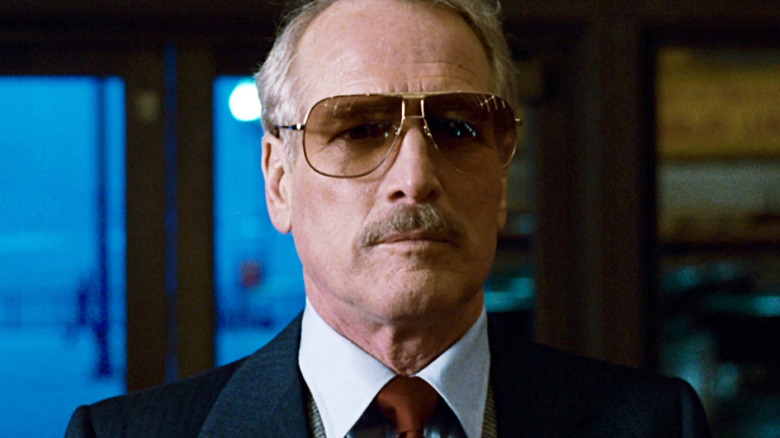
For me, Paul Newman was synonymous with candor. As with Marlon Brando and James Dean, the storied actor embodied a more sensitive kind of masculinity upon coming to fame in the 1950s. Compared to older generations of Hollywood stars, there was a raw nerve energy to guys like him. Newman never hid his age, either. When his hair went grey, it remained that way for the rest of his days. Certainly, it's hard to imagine another A-lister of yore playing a silver-haired fox who sucker-kicks his opponents like Newman did in director George Roy Hill's classic 1969 Western "Butch Cassidy and the Sundance Kid."
Newman also didn't care for what he saw as empty praise, particularly from journalists who compared him to Brando as an actor. Italian journalist Oriana Fallaci (who was quite a personality herself) learned as much upon interviewing him in 1963 (via The Film Stage). When Fallaci, at his prompting, confessed that Newman reminded her "a little bit" of Brando, it really set him off. "When journalists tell me, 'Your acting is just like Brando's,' or even 'You look like Marlon Brando,' I stop talking to them. Nothing is more stupid than saying, 'Here's another Brando, another Clark Gable'; refusing any responsibility for an honest opinion," he responded.
Candid as ever, Newman plainly laid out his problem with this comparison. In his eyes, Brando (who had secured his first acting Oscar for the studio system-breaking "On the Waterfront" eight years prior) had a specific quality on screen. "It's his ability to burn like a volcano that is about to explode. It's being Brando and only Brando, which is to say the best actor that we have in the U.S.," Newman explained, insisting this was something he lacked as a performer. Was he right?
Marlon Brando and Paul Newman were more alike as actors than Newman realized
Warner Bros. Pictures
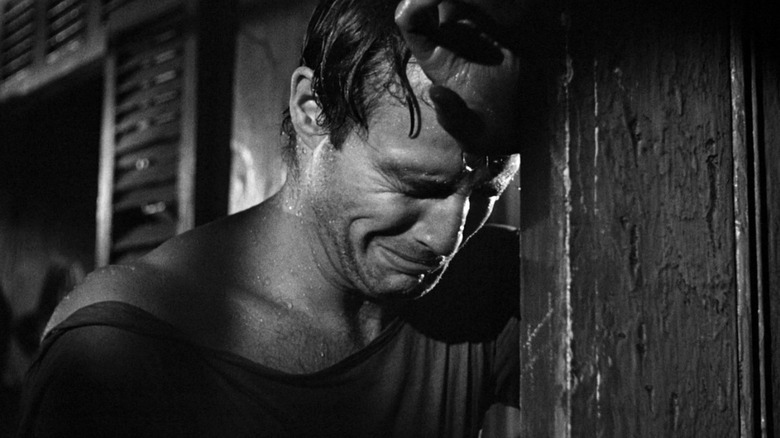
Paul Newman was spot-on with his assessment of Marlon Brando. It's what made the latter terrifying as the volatile, abusive Stanley Kowalski in 1951's "A Streetcar Named Desire" movie adaptation. Even as the collected Don Vito Corleone in "The Godfather" over 20 years later, Brando offers you glimpses of the dangerous younger Vito who worked his way to the top of the mobster food chain. The actor infamously coasted on the reputation he'd built in his later years, yet there remained something distinct about his performances all the same.
Newman, however, didn't feel he had that ability. "I'm not always myself. If I play a cowboy, I'm a cowboy, if I play a surgeon, I'm a surgeon. And if I play a gigolo, I'm a gigolo. When people watch Brando instead, they watch Brando playing the cowboy, the surgeon, the gigolo," he argued.
This is where I might disagree. Newman always projected the sense that his characters knew they were phonies when he was younger. That could mean failing to live up to their clever cool guy image like the pool player "Fast" Eddie Felson in 1961's "The Hustler" or being a monster beneath their beautiful, charismatic surface like the titular womanizer in the dark 1963 Western "Hud." The only thing that changed as Newman got older was his characters grew more aware of their foibles, as was the case when he reprised his role as "Fast" Eddie for 1986's "The Color of Money" (scoring Newman his only Oscar win).
But that's coming from someone who's able to survey his career as a whole. That, in life, Newman felt he wasn't skilled enough to hone a Brando-style screen persona for himself is very ... well, Newman-esque.




 English (US) ·
  Indonesian (ID) ·